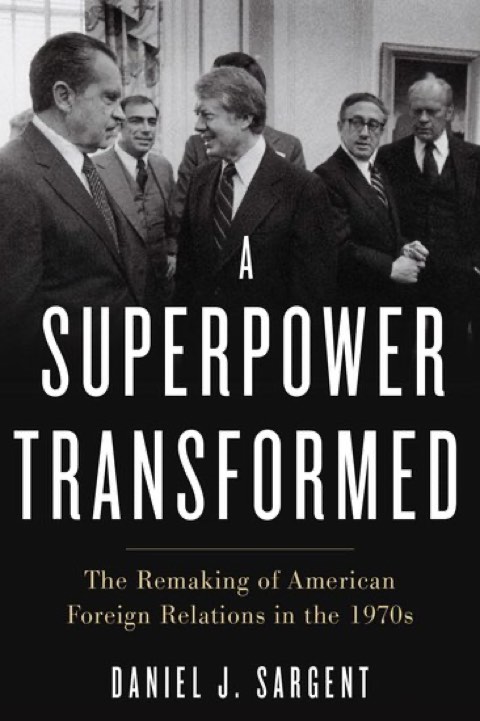
A Superpower Transformed: The Remaking of American Foreign Relations in the 1970s
How the Nixon, Ford, and Carter administrations adapted, and failed to adapt, to globalization and the unraveling of the postwar order.
I write about how the United States has sought to build and sustain international order, and about how statesmen reckon with changes in the world they cannot fully control.
As allies speak of a “rupture” in the American world order, Pax Americana sets that order in five centuries of perspective. Beginning with Adam Smith’s diagnosis of Britain’s imperial crisis in 1776, it shows that American world-ordering was no destiny but an improvisation, shaped by material capacities, political institutions, and national will, and offers a historical framework for the choices ahead.
How the Nixon, Ford, and Carter administrations adapted, and failed to adapt, to globalization and the unraveling of the postwar order.
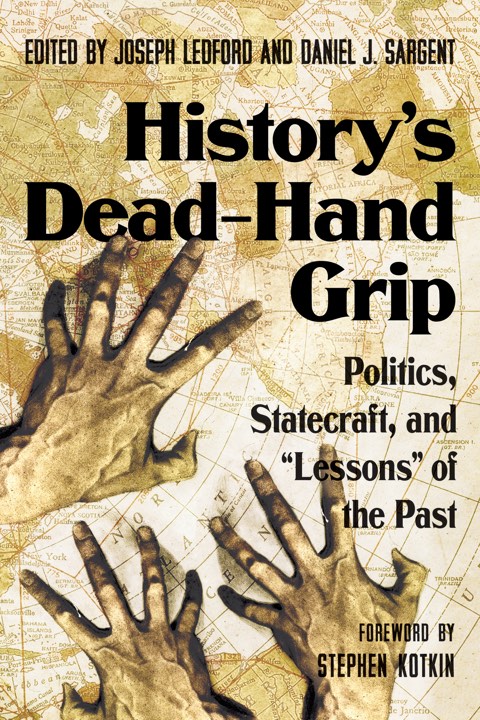
Inspired by Ernest May, to whose memory it is dedicated, this volume examines how uses and misuses of the past shape statecraft in the United States and beyond, from Brazil and Saudi Arabia to Israel, North Korea, and Indonesia.
Hoover Institution Press →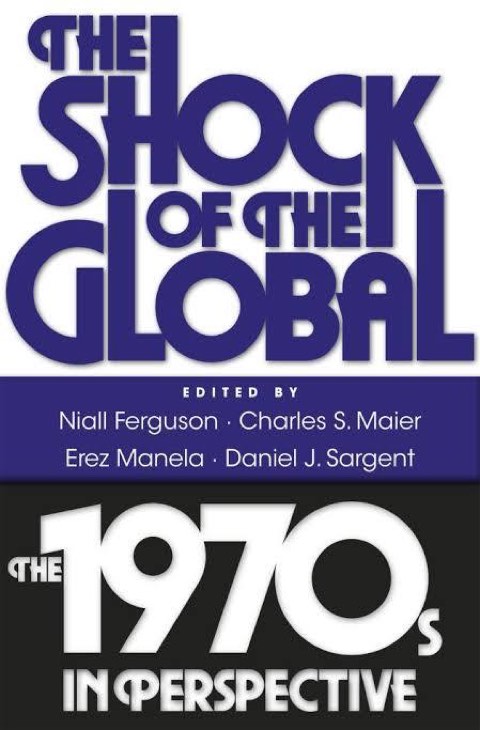
Essays reconsidering the 1970s as a hinge decade in the making of the contemporary world.
Daniel J. Sargent is the Alexander F. and May T. Morrison Professor of American History and Citizenship at the University of California, Berkeley, where he holds a joint appointment in the Department of History and the Goldman School of Public Policy. A historian of U.S. foreign relations and international history, he serves as Associate Dean of the Goldman School.
His work asks how states and policymakers adapt to long-term transformations in their international environment, and how historical understanding can inform the practice of policy. He previously co-directed Berkeley’s Institute of International Studies.
He is the author of A Superpower Transformed: The Remaking of American Foreign Relations in the 1970s (Oxford University Press, 2015) and of numerous articles and chapters. He is a co-editor of The Shock of the Global: The 1970s in Perspective (Harvard University Press, 2010) and History’s Dead-Hand Grip (Hoover Institution Press, 2026). His current book, Pax Americana: The Past, Present, and Prospects of the American World Order, under contract with Princeton University Press, sets the American effort to build order in world politics in five centuries of perspective.
He received his PhD in History from Harvard University in 2008 and his BA, with double first-class honors, from the University of Cambridge in 2001. He has been a postdoctoral fellow at International Security Studies at Yale and the William C. Bark National Fellow at the Hoover Institution.
His work has been recognized by the Society for Historians of American Foreign Relations, which awarded him its Stuart L. Bernath Lecture Prize and gave A Superpower Transformed an honorable mention for the Stuart L. Bernath Book Prize. He has delivered the O. Meredith Wilson Lecture in History at the University of Utah and held the Harold Strom Visiting Professorship at the University of Toronto.
Summer seminars and workshops on the global Cold War for K–12 teachers, with the Gilder Lehrman Institute of American History, the California History–Social Science Project, and school districts across California.